فهم جراحات السمنة — دليلك الشامل
Obesity is a disease, not a lifestyle choice. At Ghalwash Hospital, we believe every patient deserves an informed understanding of their surgical options. This guide, drawn from decades of clinical experience, explains the different types of bariatric surgery, their benefits and risks, and how to make the right decision for your health.
السمنة مرض وليست عرض. المريض لازم يفهم كل التفاصيل قبل ما ياخد القرار — ده حقه وده واجبنا.
When Is Surgery the Right Choice?
إمتى الجراحة بتبقى الحل؟
Bariatric surgery is not the first resort — it is a powerful tool for patients whose obesity causes or worsens serious medical conditions. The decision to pursue surgery depends on multiple factors:
Body Mass Index (BMI): Traditionally, patients with a BMI above 40 (or above 35 with comorbidities) are candidates. However, modern approaches consider the full clinical picture — a patient with a BMI of 30 who has developed diabetes and hypertension may benefit more than a patient with a BMI of 40 who has no comorbidities.
Comorbidities: Diabetes, hypertension, cardiovascular disease, joint deterioration, sleep apnea, and certain cancers are all linked to obesity.
Previous attempts: Patients who have tried diet, exercise, and lifestyle changes without sustained success are often candidates.
New medications: In the past five years, breakthrough GLP-1 agonist medications have transformed the landscape. These can be used before surgery, instead of surgery for some patients, or alongside surgery for optimal long-term results.
Sleeve Gastrectomy (التكميم)
قص المعدة
Sleeve gastrectomy involves the permanent removal of approximately 90% of the stomach, creating a narrow tube-shaped stomach. It is the most commonly performed bariatric procedure worldwide.
How it works: The reduced stomach capacity limits food intake, leading to significant weight loss — typically 25 to 60 kg in the first six months.
Important considerations:
• Irreversible — Once the stomach is removed, it cannot be restored. If future treatments (gene therapy, advanced medications) become available, patients cannot benefit from having their full stomach.
• Reflux risk — More than 50% of patients may develop acid reflux (GERD), potentially requiring lifelong medication.
• Stomach re-expansion — After 3-5 years, the remaining stomach can stretch, allowing patients to eat larger portions again. This is the primary cause of weight regain.
• Weight regain — Long-term failure rates are higher compared to gastric bypass procedures.
Despite these considerations, sleeve gastrectomy remains a valid option for many patients. The key is understanding these realities before making a decision — not after.
The science behind it: Sleeve gastrectomy removes the part of the stomach that produces ghrelin — the hunger hormone. Patients often say: "Did you operate on my stomach or my brain?" The reduction in hunger is hormonal, not just mechanical. This is why 70-80% of all bariatric surgeries worldwide are sleeve gastrectomy.
Capacity change: The stomach goes from approximately 1 liter to around 250ml — about the size of a banana.

Gastric Bypass (التحويل)
تحويل المعدة
Gastric bypass creates a small stomach pouch and reroutes a section of the small intestine. Unlike sleeve gastrectomy, no stomach tissue is permanently removed — making the procedure potentially reversible.
Standard Gastric Bypass: Creates a small pouch connected to the small intestine. Success rate of approximately 66% at five years. The pouch can expand over time, similar to sleeve gastrectomy.
The Modified Gastric Bypass (التحويل المعدل): Our innovation involves three key modifications:
1. Ultra-small pouch — Even if the pouch expands, it grows from 'very small' to 'small' rather than from 'small' to 'normal'
2. External reinforcement — A band placed around the pouch limits expansion beyond a certain point
3. Optimized intestinal measurements — Precise calibration of the intestinal bypass ensures adequate nutrition while maximizing weight loss
Result: 91% long-term success rate versus 66% for standard gastric bypass.
Weight Loss Statistics: Sleeve gastrectomy patients typically lose 55–65% of excess weight (EWL), while modified gastric bypass patients achieve 60–75% EWL within 12–18 months. These numbers reflect real clinical outcomes, not marketing claims.
Diabetes resolution: Gastric bypass produces hormonal changes that directly address insulin resistance — meaning even if a patient regains some weight, their diabetes often remains resolved. This is a fundamental advantage over sleeve gastrectomy, where diabetes improvement is weight-dependent.
The 48-hour miracle: In many Type 2 diabetes patients, insulin requirements drop dramatically within 48 hours of bypass surgery — patients who were taking 40-50 units daily often stop insulin entirely. The mechanism: bypassing the duodenum directly reduces insulin resistance. This is why 90% of Type 2 diabetes patients enter remission after bypass.
المريض لازم يلاقي جراح علمي وليس جراح تجاري
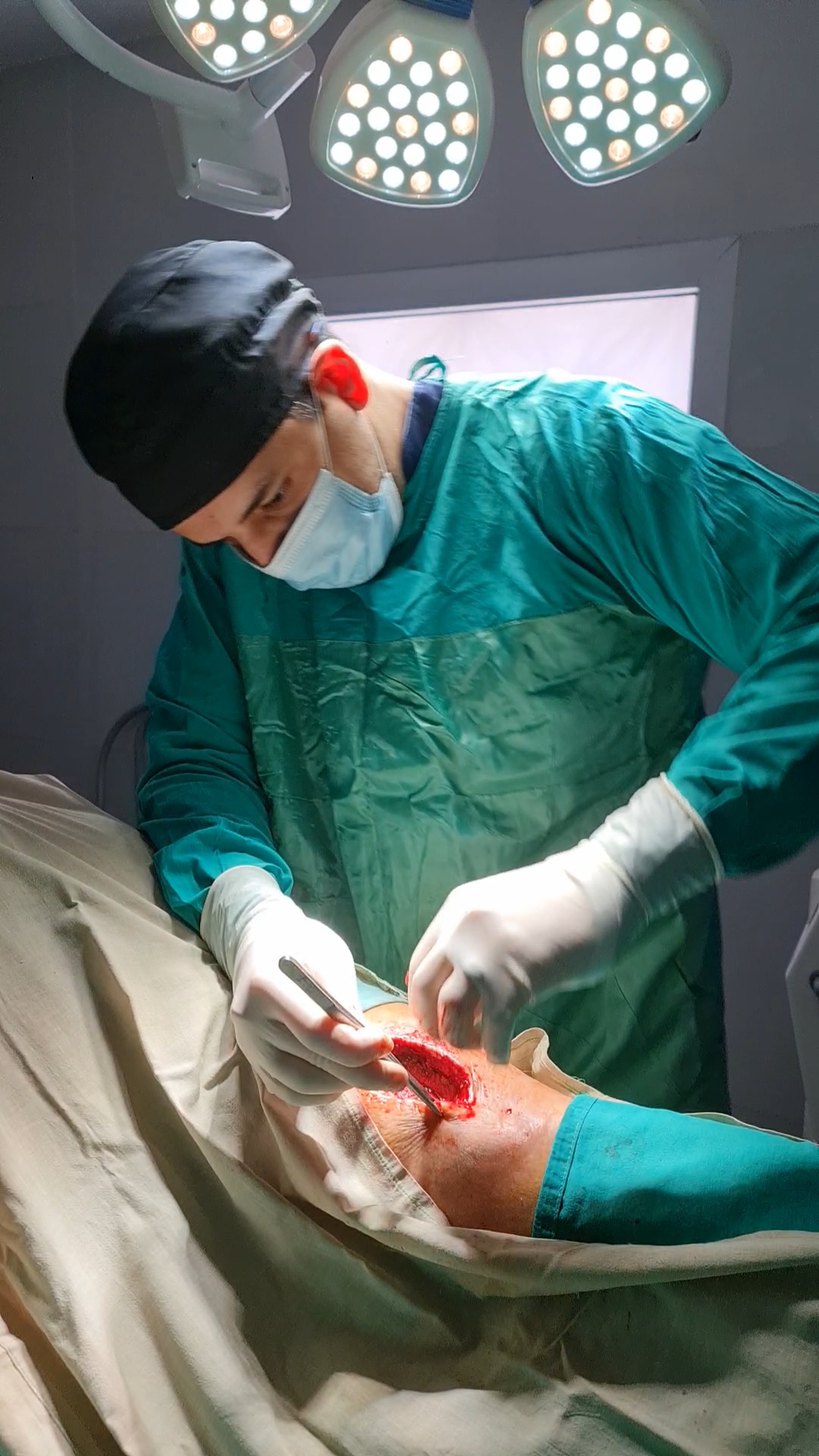
Complication rates in context: With a high-volume surgeon (100+ cases per year), the complication rate for bariatric surgery is 1.5-1.8%. That means 1-2 patients out of 100 may experience complications like leaks or bleeding — and these are manageable with early intervention. Compare that to the complications of untreated obesity: diabetes, heart disease, cancer, joint destruction, infertility. The math is clear.
Will I need body contouring afterwards? Some patients with significant weight loss may benefit from body contouring procedures. Dr. Khaled Ghalwash specializes in post-bariatric body contouring.
Is the surgery painful? Modern laparoscopic techniques mean minimal pain and fast recovery. Most patients return to normal activities within 1-2 weeks.
What is the difference between SASI bypass and standard bypass? SASI (Single Anastomosis Sleeve Ileal) bypass is a newer variation that combines sleeve gastrectomy with an intestinal bypass. Discuss with your surgeon which approach is best for your specific situation.
BMI 35-40: Grade 2 — surgical candidate if comorbidities present (diabetes, hypertension, sleep apnea).
BMI 40-50: Grade 3 — strong surgical indication regardless of comorbidities.
BMI 50+: Super Obesity — urgent surgical intervention recommended.
Conservative measures (diet, exercise, medication including GLP-1 trial) must fail first before surgery is indicated.
B — Breathing: Sleep apnea resolves in most patients — 13 million Egyptians are affected, many undiagnosed.
C — Circulation: Cardiac function improves as the heart no longer works against excess body mass.
D — Disability: Patients who were wheelchair-bound regain mobility. We have seen patients go from immobile to completing marathons.
E — Economics: Patients return to productivity and work — one surgery costs less than a lifetime of insulin, blood pressure medication, and sleep apnea treatment.
F — Fertility: PCOS and insulin resistance resolve — pregnancy becomes possible after losing 25-30% of body weight.
Use cases: Pre-surgical weight reduction for very high BMI patients, or for patients who need to lose moderate weight for an event.
NOT a permanent solution — weight regain after removal is common without lifestyle changes.
Can be useful as a bridge to surgery for patients whose BMI is too high for safe anesthesia.
Bariatric surgery at Ghalwash Hospital:
- Modified Gastric Bypass with 91% long-term success rate
- Comprehensive pre-operative assessment and preparation
- Structured post-operative follow-up program
- AI-powered patient monitoring and communication
- Nutrition guidance and lifelong support
- Combined cosmetic and general surgical expertise for complete patient care
- Cross-specialty advantage: rapid weight loss can increase gallstone risk — our team manages both under one roof
- Many bariatric patients also have thyroid conditions — Dr. Ghalwash treats the whole patient
- Regained weight or have reflux after a sleeve? See revision bariatric surgery
"The best surgery is the one you don't need." — Dr. Khaled discusses when bariatric surgery is truly necessary and when patients should try alternatives first.
Read the full conversation →Before booking bariatric surgery — read our guide to choosing your surgeon to know what to look for.
Worried about the cost? See installment plans and how your health insurance fits in.
Before your surgery: what tests Dr. Khaled Ghalwash will order
Every patient receives the standard pre-operative panel. Dr. Khaled Ghalwash add personalised tests by profile (cardiac, diabetic, age over 50 with chronic cholecystitis).
Pre-operative assessment overview → · Diabetic patients before bariatric surgery →
Enhanced Recovery After Surgery (ERAS) — the protocol Dr. Khaled Ghalwash applies
The international evidence-based protocol that cuts complications by up to 50 percent, shortens hospital stay by 30 to 50 percent, and improves cancer survival. Dr. Khaled Ghalwash apply the relevant ERAS Society guideline to every elective procedure.
Enhanced Recovery overview → · ERAS for bariatric surgery — the recovery protocol →
