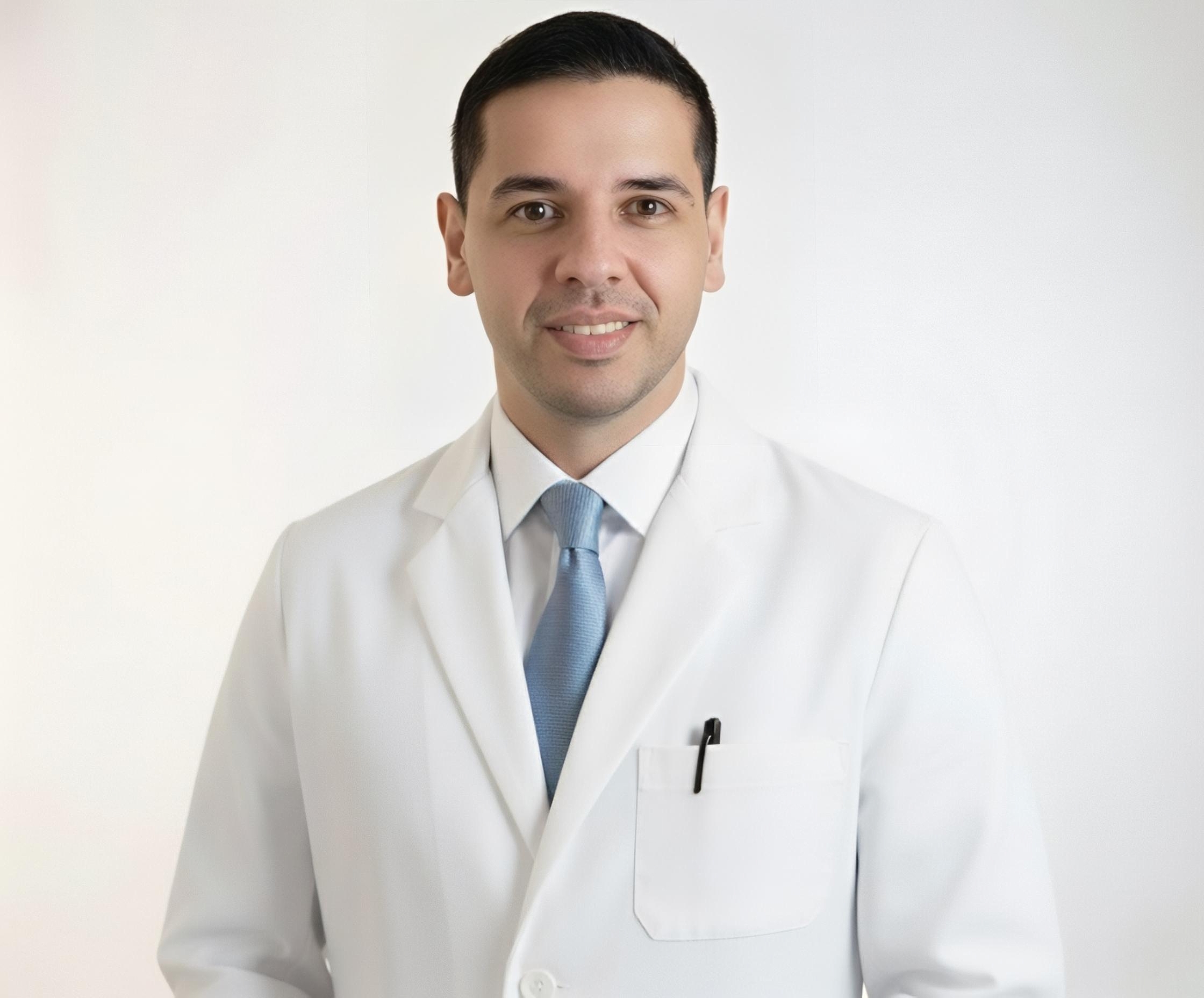
Prominent ears are about the fold, not the size
Ears that stick out are rarely too large. In most people the natural fold that should curve the ear gently inward never fully formed, so the ear sits at a wider angle from the head. Otoplasty rebuilds that fold and sets the ear back to a natural position, through an incision hidden behind the ear, with nothing visible from the front. Dr. Khaled Ghalwash corrects both ears together for symmetry, in children before school age, teenagers, and adults alike.
الأذن الناصة مش "كبيرة" — الطية الطبيعية هي اللي ناقصة. وبنرجّعها، مش بنشيل الأذن.
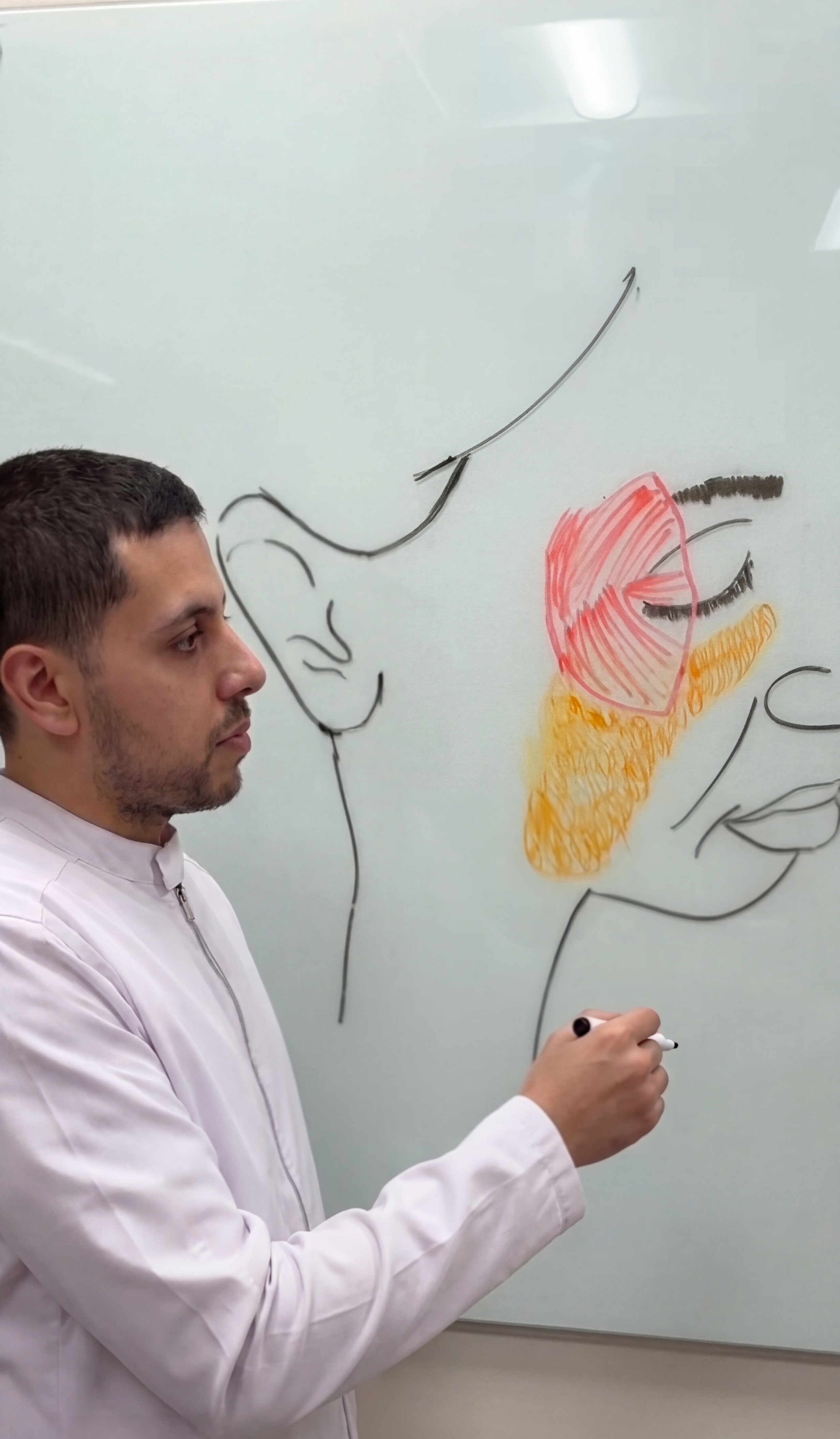
Why ears become prominent
ليه الأذن بتبقى ناصة
Prominent ears are present from birth and usually run in families. Two features cause them, alone or together:
An underdeveloped antihelical fold: the antihelix is the soft ridge inside the rim that should curve the upper ear inward. When it is shallow or absent, the upper ear flops outward and looks unfolded.
A deep conchal bowl: the concha is the cup of cartilage next to the ear canal. When it is too deep or tilted, it pushes the whole ear away from the side of the head, increasing the angle.
Because the shape is set in the cartilage, ears do not "grow into" a better position and taping only helps in the first weeks of life. In a developed ear, surgery is what changes the angle.
How the surgery is done — reshape, do not remove
التقنية — إعادة تشكيل، مش إزالة
The modern principle is to reshape the cartilage, not cut it away. Removing or over-scoring cartilage leaves sharp edges and an unnatural ear; gentle reshaping with sutures keeps the ear soft and natural.
Recreating the fold (Mustardé sutures): fine permanent sutures fold the cartilage along where the antihelix should be, restoring the natural inward curve of the upper ear.
Setting the bowl back (conchomastoid sutures): when the conchal bowl is deep, sutures anchor it closer to the bone behind the ear, reducing the angle so the ear sits flatter against the head.
The hidden incision: all of this is done through an incision in the natural crease behind the ear, which heals to a fine line no one sees. There is no incision on the front of the ear or the face.
Not sure your child needs surgery, or whether to wait? Read our honest assessment guide first.
Common questions
At what age can a child have otoplasty?
The ear is close to adult size by about age 5–6, so surgery is safe from then on. Many families choose to do it before or around the start of school, when prominent ears most often draw teasing. There is no upper age limit; teenagers and adults do equally well.
Will there be a visible scar?
No scar on the face. The incision sits in the natural crease behind the ear and heals to a fine, hidden line. All of the reshaping is done through that hidden approach.
Is cartilage removed?
In most cases, no: the cartilage is reshaped, not removed. Cartilage-sparing sutures (Mustardé sutures to recreate the fold, conchomastoid sutures to set the bowl back) bend it into a natural shape and hold it. A very deep conchal bowl may also need a small setback.
What is recovery like, and do results last?
A structured protocol supports the ears through healing. For the first week, a padded head wrap protects the ears full-time. At the follow-up visit it's swapped for a lighter headband worn 24/7 — removable only for a quick shower — for a second week, then at night only for about four more weeks, so roughly six weeks of night-time wear in total while the fold holds its new position. Pain is usually mild; if it becomes severe, that's worth a call, since it can signal a problem rather than normal healing. Children return to school and adults to work in about 1–2 weeks, avoiding contact sports for around 6 weeks. When the fold is properly recreated and supported, the correction is long-lasting; minor relapse or asymmetry is uncommon and adjustable.
Choosing your surgeon matters — read how to choose a surgeon before taking any step.
Before surgery: what Dr. Khaled Ghalwash will check
Every patient receives the standard pre-operative assessment, with personalised tests added by profile, and, for children, an anaesthetic-fitness check.
