Revision & corrective surgery — correcting or improving a previous operation
A revision is a second operation that corrects, completes, or improves the result of an earlier surgery — whether the first operation had a complication, healed in a way that causes a functional or aesthetic problem, or simply did not reach the goal. It is a separate discipline from primary surgery, because the surgeon works through scar tissue and altered anatomy. Dr. Khaled Ghalwash approaches revision as reconstruction — mapping what was done, then rebuilding — across bariatric, general, anorectal, body-contouring, and facial surgery in Alexandria.
If you have already had an operation and you are unhappy, in difficulty, or simply unsure whether it can be improved, this page explains how a second operation is judged: why it is harder than the first, when to wait and when not to, what to bring, and how to choose a surgeon for it.
Why a second operation is a different operation
The first operation changes the field permanently. Normal tissue planes are replaced by scar, blood supply may be reduced, anatomical landmarks are distorted, and there is less healthy tissue to work with. A revision surgeon plans around all of this — mapping the altered anatomy first, then rebuilding support or volume rather than removing more. Each subsequent operation in the same place is a little harder than the last, which is why the second attempt should be the definitive one, planned carefully, not a quick repeat of the first.
When to operate — and when to wait
For most elective revisions the tissues need to mature and swelling to settle — usually about 12 months after the first surgery, sometimes longer where scar is thick. Operating on inflamed, unsettled tissue makes the result unpredictable. Waiting is not delay for its own sake; it is letting the field become safe to operate on.
The exceptions are problems that should not wait and are assessed promptly: infection, an exposed or infected implant, airway or other functional compromise, or a wound that will not heal. If you are not sure which situation you are in, that itself is a reason to be seen.
What to bring to a revision consultation
- The operative note from your previous surgery, if you can obtain it — it shows exactly what was done.
- Any implant or device card (type, size, surface, date).
- Pathology or biopsy reports, and any imaging (ultrasound, CT, MRI).
- Photographs of yourself including the original problem before the first surgery.
These shorten the diagnosis, reveal what was actually done, and make planning the second operation safer.
What can be revised
Revision is not one operation but a way of working that applies across specialties. The dedicated guides below cover the most common requests; the principle is the same in each.
-
1
Revision rhinoplasty
A breathing problem, a visible irregularity, or a result that did not match the plan after a first nose operation — usually rebuilt with structural cartilage grafts. Revision rhinoplasty →
-
2
Revision bariatric surgery
Weight regain, inadequate loss, or reflux after a sleeve — converted to a bypass or re-sleeved after the anatomy is mapped. Revision bariatric surgery →
-
3
Breast implant revision
Capsular contracture, malposition, or a wish to exchange or remove implants — corrected with capsulectomy, repositioning, exchange, or explant. Breast implant revision →
-
4
Recurrent anorectal surgery
A fistula or pilonidal sinus that came back after surgery — re-mapped and repaired with a sphincter-preserving or off-midline flap technique. Recurrent fistula & pilonidal →
Two examples of how revision thinking changes the answer
Correcting liposuction that disappointed — and why the tool matters
Liposuction is one of the operations patients most often want revised: contour irregularities, asymmetry, or an incomplete result. The second (or third) field is scarred and fibrous, and an ordinary hand-driven cannula struggles in it and tends to leave more irregularity. Dr. Khaled Ghalwash uses MicroAire power-assisted liposuction (PAL) — a reciprocating cannula that moves through fibrotic, previously-treated tissue far more evenly and controllably, which is exactly what a revision field needs. The honest limit: revision liposuction refines — it evens out and removes residual stubborn fat; where a previous operation left a dent from over-removal, fat grafting may be needed to fill rather than take away. See liposuction & body contouring and the results gallery.
When a surgeon leaves part of an organ to spare you medication
A patient had thyroid nodules with a precancerous biopsy result. The first surgeon deliberately left a small piece of thyroid behind so the patient would not need levothyroxine (Eltroxin) for life. That reasoning trades the wrong things: a retained, at-risk remnant can itself turn cancerous and complicates any later cancer treatment, while a daily thyroid tablet is simple, cheap, and well tolerated. The corrective operation is to complete the resection and restore oncologic safety. The principle generalises beyond the thyroid — convenience should not be bought with cancer risk. See thyroid surgery.
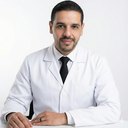
Dr. Khaled Ghalwash treats a revision as reconstruction, not a repeat. We map exactly what was done before, we plan to rebuild what is missing, and we are honest about the ceiling — what can be improved, what should wait, and the rare case that is safer left alone. The second operation should be the one that settles it.
How to choose a surgeon for a revision
The criteria are not about credentials on a wall. Look for a surgeon who does reconstructive and microsurgical work, not only first-time cases; who asks for your old records and implant cards before discussing surgery; who explains what went wrong without blaming the first surgeon; and who is willing to say "no" or "not yet" when that is the safer answer. Ask specifically how many revisions of your particular operation they perform. A surgeon comfortable with revision will answer all of this plainly.
Frequently asked questions
What is revision surgery?
Revision surgery is a second operation that corrects, completes, or improves the result of a previous surgery — whether the first operation had a complication, healed in a way that causes a functional or aesthetic problem, or simply did not reach the goal. It is a distinct discipline from primary surgery: the surgeon works through scar tissue and altered anatomy, so it leans on reconstructive and microsurgical technique rather than simply repeating the first operation.
Why is a second operation harder than the first?
The first operation changes the field permanently. Normal tissue planes are replaced by scar, blood supply may be reduced, anatomical landmarks are distorted, and there is less healthy tissue to work with. A revision surgeon plans around this — mapping the altered anatomy first, then rebuilding support or volume rather than removing more. This is why a revision belongs with someone who does reconstructive and microsurgical work, not only first-time cases.
How long should I wait before a revision?
For most elective revisions the tissues need to mature and swelling to settle — usually about 12 months after the first surgery, sometimes longer where scar is thick. Operating on inflamed, unsettled tissue makes the result unpredictable. The exceptions are problems that should not wait: infection, an exposed or infected implant, airway or other functional compromise, or a wound that will not heal — these are assessed promptly.
What should I bring to a revision consultation?
Bring the previous operative note(s) if you can obtain them, any implant or device card, pathology or biopsy reports, and photographs of yourself including the original problem before the first surgery. These shorten the diagnosis, reveal exactly what was done, and make planning the second operation safer.
Can every unsatisfying result be fixed?
Most can be improved, but honesty matters: not every result can be made perfect, and a small number are safer left alone than re-operated. A careful revision surgeon will tell you when surgery is likely to help, when to wait for tissues to settle, and when the risk of creating a third problem outweighs the benefit. Being told "not yet" or "this is as good as it should get" is part of good revision care.
How do I choose a surgeon for a revision?
Look for a surgeon who does reconstructive and microsurgical work, not only primary cases; who asks for your old records and implant cards; who explains what went wrong without blaming the first surgeon; and who is willing to say "no" or "not yet" when that is the safer answer. Ask specifically how many revisions of your particular operation they perform.
My first surgeon left part of the organ to save me from lifelong medication — was that the right call?
Not always, and sometimes it is the wrong call. A clear example is the thyroid: when nodules carry a precancerous biopsy result, leaving a piece of thyroid behind to spare the patient lifelong levothyroxine (Eltroxin) trades oncologic safety for the convenience of avoiding a single daily tablet. That retained, at-risk tissue can itself turn cancerous and complicates any later cancer treatment. Levothyroxine is simple, cheap, and well tolerated; a non-excised at-risk remnant is a standing liability. The corrective operation — completion of the resection — restores safety. The principle generalises: convenience should not be bought with cancer risk.
Discuss a revision with Dr. Khaled Ghalwash
Bring your previous operative notes, implant cards, and photographs. We map what was done, tell you honestly what can be improved and when, and plan a second operation built to be the definitive one.
WhatsApp 01500509000