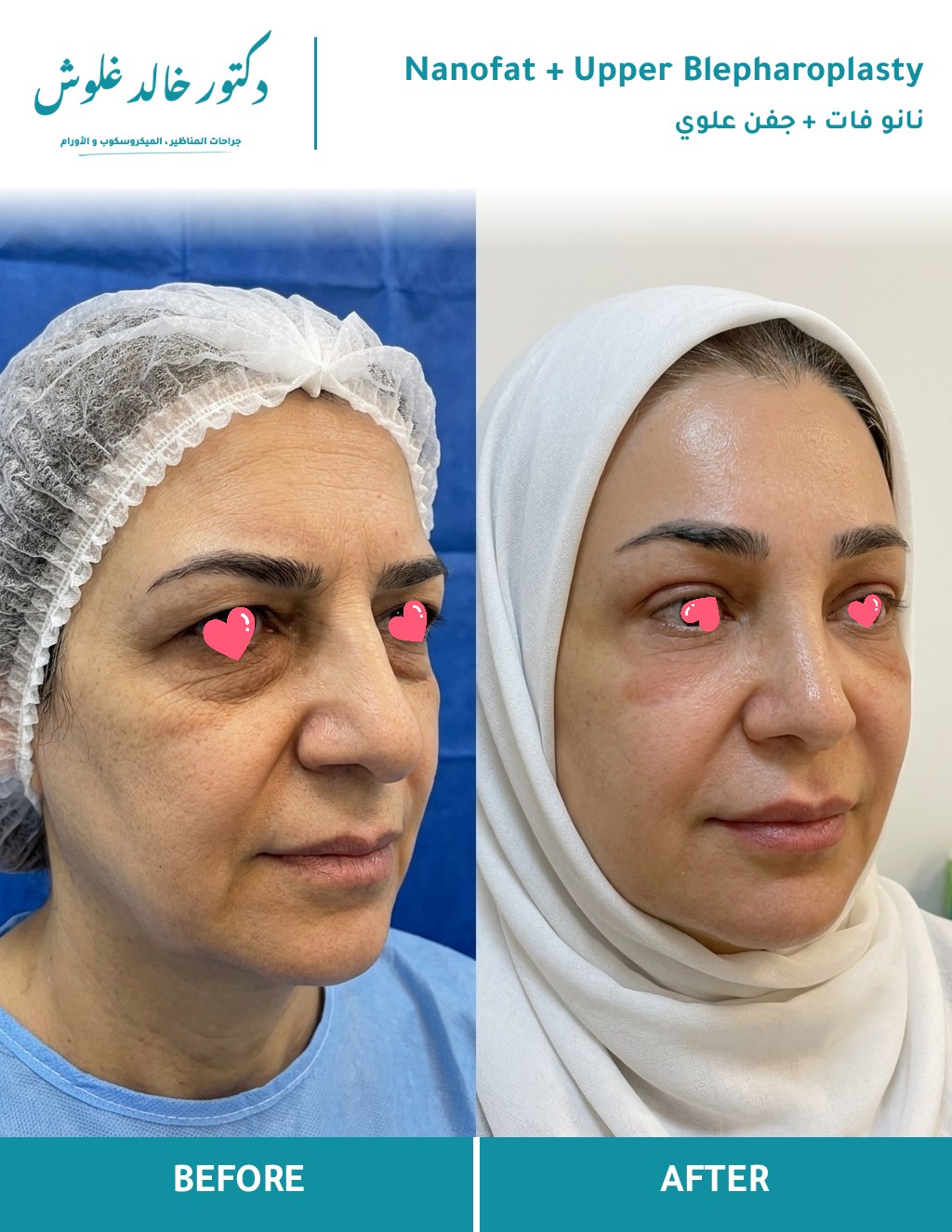
Open up a heavy, tired eye — without hollowing it out
When excess skin gathers on the upper lid, the eye looks heavy and tired — and when it hangs over the lashes, it can even narrow your vision. Upper blepharoplasty removes that excess through an incision hidden in the natural crease. The modern goal is not to strip the eye bare but to lighten it while keeping a natural fullness — which is why the fat is preserved, not simply removed, and the brow is assessed first.
بنفتح العين التقيلة — من غير ما نفرّغها. بنشيل الجلد الزائد ونحافظ على الامتلاء الطبيعي.
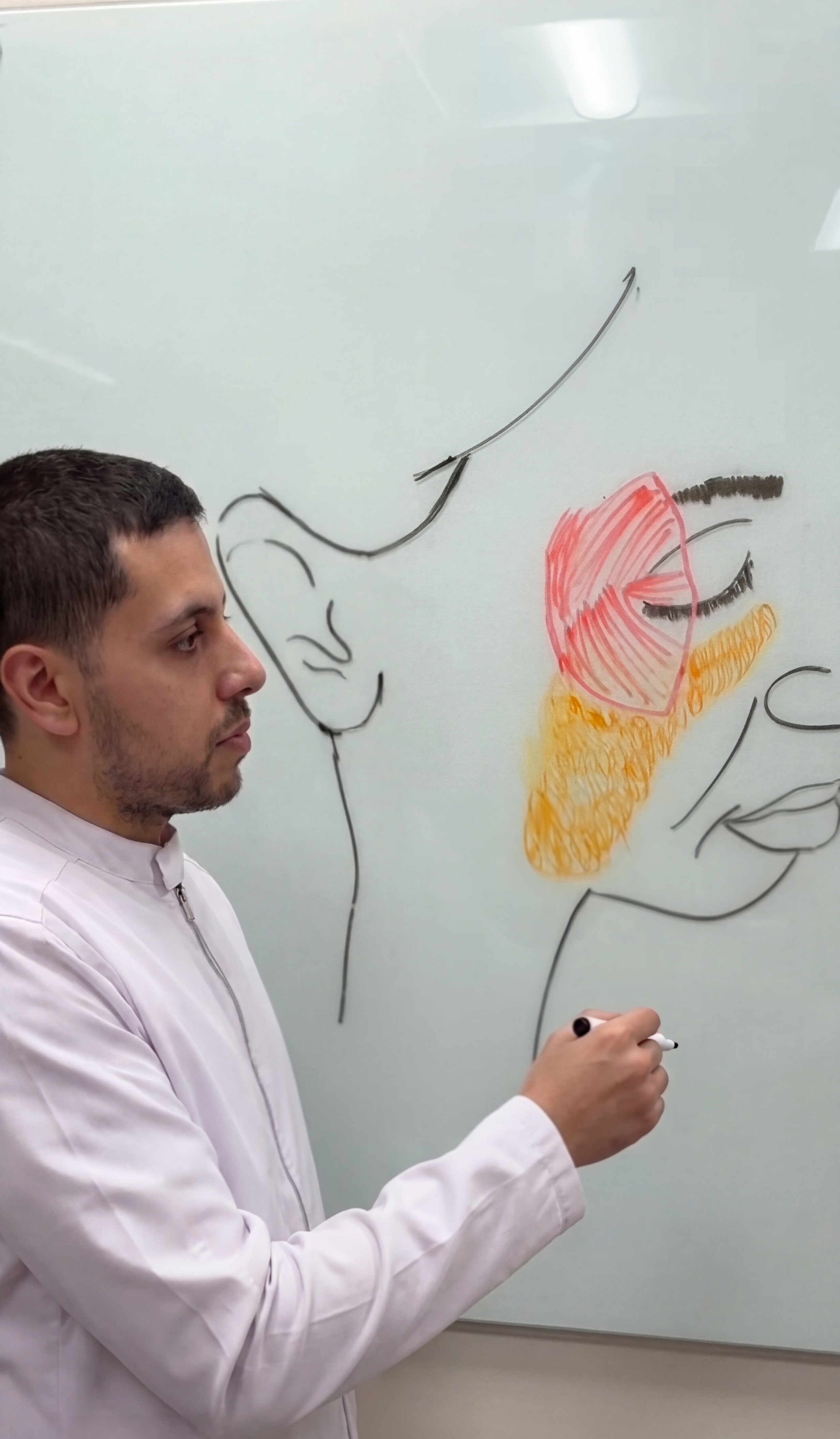
Why upper lids become heavy — and why the brow matters
ليه الجفن العلوي بيتقل — وليه الحاجب مهم
With age the upper-lid skin stretches and the supporting tissues relax, so skin gathers in the fold (dermatochalasis) and the eye looks hooded. Sometimes a small fat pad adds to the fullness.
But not every heavy upper eye is a skin problem. A brow that has dropped pushes skin down onto the lid and mimics excess lid skin. Removing lid skin in that situation pulls the brow down further and gives an unnatural result. That is why the brow position is assessed before anything is planned — the right operation depends on it.
Getting this distinction right is the difference between a rested, natural eye and an over-operated one.
The modern technique — conservative and volume-preserving
التقنية الحديثة — محافظة وبتحافظ على الامتلاء
Hidden-crease incision: the incision sits in the natural upper-lid crease, so it is invisible when the eyes are open and heals to a fine line.
Only the excess skin is removed: the amount is measured conservatively. Taking too much is what leaves a hollow, staring, "operated" eye — and cannot be undone — so the principle is to remove less rather than more.
Fat is preserved, not stripped: current evidence favours keeping or repositioning the upper-lid fat to maintain a natural, youthful fullness, rather than the old habit of removing it, which ages the eye by hollowing it.
Not sure whether you need surgery, or just tired-looking eyes? Read our honest assessment guide first.
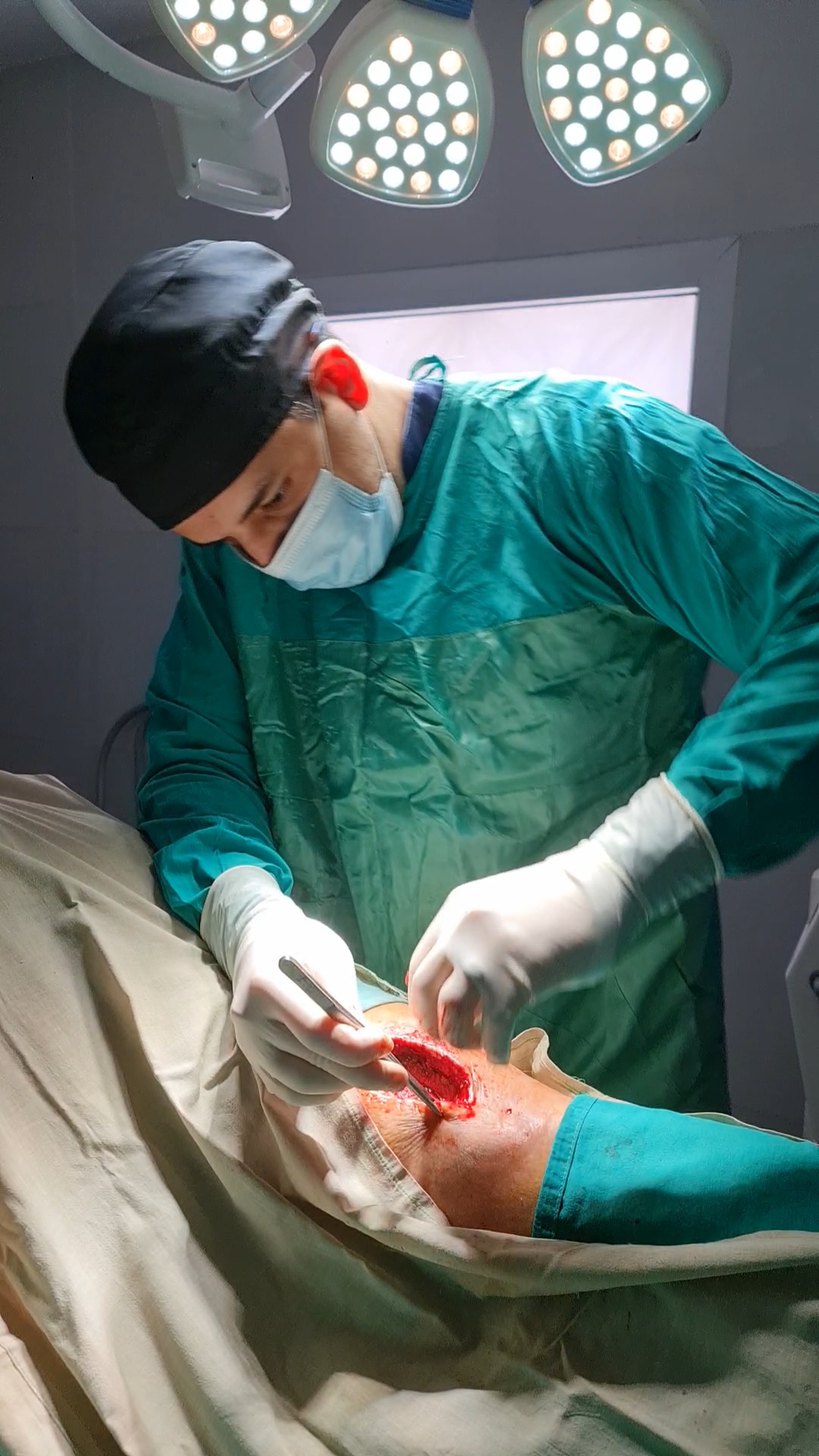
Upper and lower eyelids together: one plan, one recovery
The eye is one unit. Heavy upper lids shrink the visible eye and make the under-eye hollow look darker, so treating only one lid often exposes the other. Whether both are needed is decided at the examination, never assumed.
- 1
Assess both lids together
Upper: excess skin, fold height and brow position. Lower: fat prominence, laxity and orbital vector. The plan is drawn once, for the whole eye.
- 2
Upper lid first
Excess skin is removed along the natural crease, with fat only where it is truly excessive, while checking that the brow is not the real cause of the heaviness.
- 3
Lower lid second
Fat is repositioned through the inside of the lid, with a conservative pinch of skin or canthal support only if the exam called for it.
- 4
One anaesthetic, one recovery
Fine inert sutures, one healing period, one follow-up path.
When one lid is enough: if only the lower lid is puffy, or only the upper is heavy, we operate on that lid alone. Combining is a decision, not a package.
Lower-lid details: the lower blepharoplasty page.
Common questions
Is it cosmetic, or can it be functional?
Both. Many want a fresher, less heavy look — but when the excess skin hangs over the lashes it can block the upper part of your vision, a genuinely functional problem that surgery corrects, not only a cosmetic one.
Where is the scar?
In the natural crease of the upper eyelid — hidden when your eyes are open, healing to a fine, barely visible line. The incision is planned along that crease so the closed lid looks untouched.
Do you remove all the fat?
No — the approach has changed. Older surgery aggressively removed skin, muscle and fat, which could hollow the eye. The modern, evidence-based approach is conservative: remove only the excess skin and preserve or reposition the fat for a natural fullness. The brow is assessed first, because a low brow is treated differently, not by cutting more lid skin.
What is recovery like?
Sutures out at 5–7 days; mild swelling and bruising settle over about two weeks with cold compresses and head elevation. Most people return to desk work within a week, and the fine crease scar fades over the following months.
Can it be combined with lower lids or nanofat?
Yes, commonly. Upper surgery removes the heavy skin above the eye; nanofat or lower-lid surgery refreshes the tired, hollow area below it — together rejuvenating the whole eye in one session, one anaesthetic, one recovery. See the combined case in the gallery.
What are the risks?
The main pitfalls are removing too much — a hollow eye or, rarely, difficulty closing the lids fully — and missing an underlying heavy brow. Both are avoided by conservative skin removal, preserving the fat, and assessing the brow and lid position before any incision. When in doubt, less is removed: more can be done later, but a hollow is hard to reverse.
Pairs naturally with nanofat and lower eyelid surgery for complete periorbital rejuvenation.
Choosing your surgeon matters — read how to choose a surgeon first.
