Tummy Tuck (Abdominoplasty)
Abdominoplasty removes excess lower-abdominal skin and fat, tightens the abdominal wall muscles, and repairs the muscle separation (diastasis recti) commonly left by pregnancy or major weight loss. This is body contouring, not weight loss.
Before & after gallery Liposuction & body contouring Book a consultation
Sample result — Tummy Tuck (Abdominoplasty)
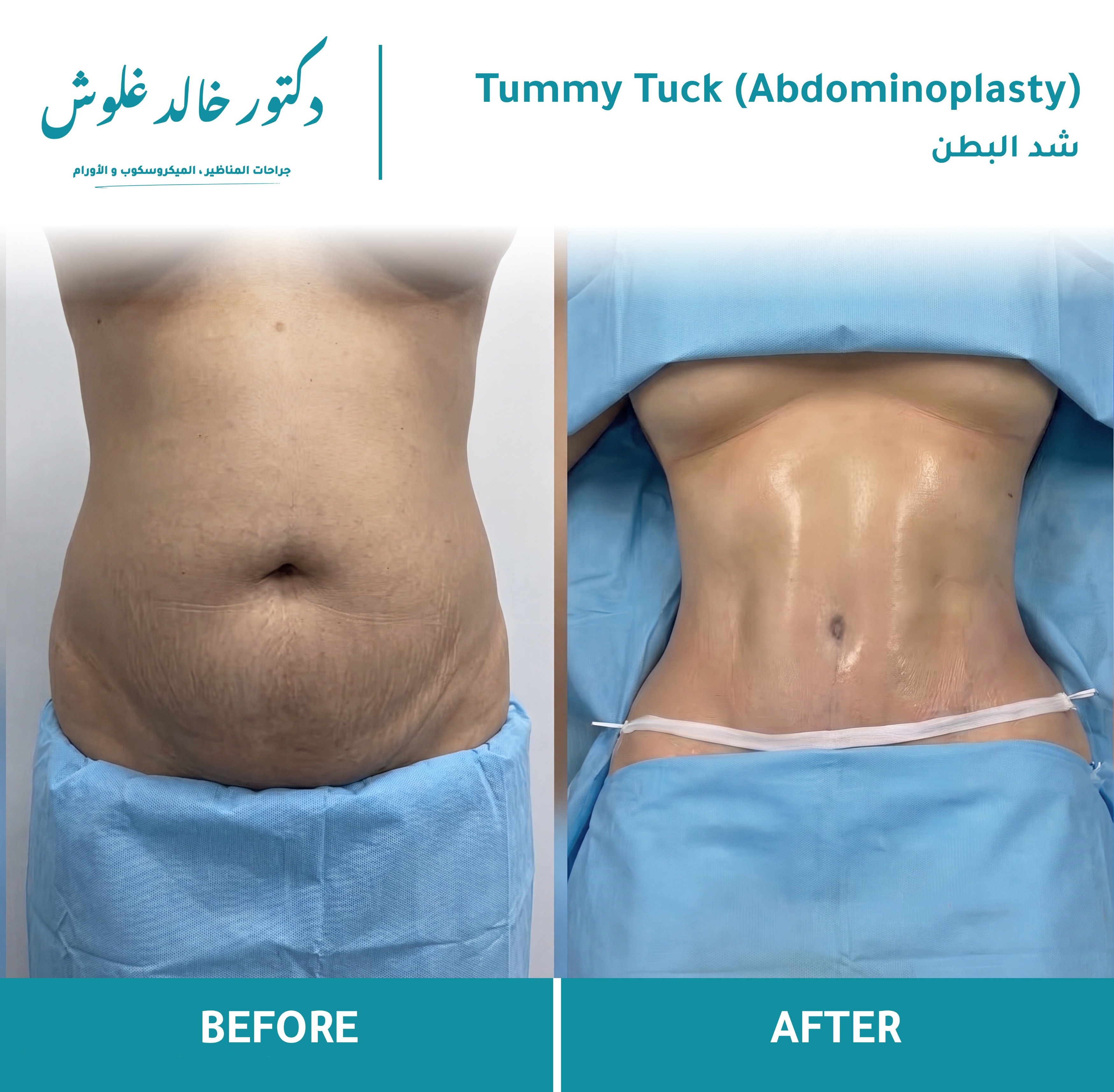
See the full gallery for documented tummy-tuck cases with pre/post pairs.
Frequently asked questions
What is a tummy tuck (abdominoplasty)?
A tummy tuck removes excess abdominal skin and fat, tightens the underlying muscles, and repairs a diastasis recti (separation of the six-pack muscles) that pregnancy or significant weight loss can leave behind. It is a body-contouring operation, not a weight-loss operation.
Who is a good candidate?
Patients with loose lower-abdominal skin, muscle separation, or a fatty apron that will not respond to diet, weight loss, or liposuction alone. A stable weight, non-smoker status, no active plans for future pregnancy, and realistic expectations are the essentials.
What is the recovery like?
You leave hospital the next day, drains are usually removed within a week, desk work resumes at 10–14 days, and gym-level activity at 6 weeks. A compression garment is worn for 4–6 weeks. The scar sits low, matures over 12 months, and is designed to be covered by underwear.
Full tummy tuck, mini, or fleur-de-lis — which?
A full abdominoplasty addresses skin from above the belly button downward and repairs the muscle. A mini is for a small amount of lower-belly skin only. A fleur-de-lis (with a vertical scar) is reserved for very significant post-bariatric skin excess. The choice depends on where the excess is and how much muscle separation exists.
Can liposuction be combined?
Yes — liposuction of the flanks or waist is often combined in the same session to give a fully contoured result. This is one of the most common combined body-contouring operations we perform.
Choosing your surgeon matters — read how to choose a surgeon before any step.
